The Context
Auckland's food discovery problem
Post-COVID, Auckland's hospitality industry was under pressure, and Zomato leaving New Zealand made it harder for people to discover restaurants, deals, and reasons to eat out. Hops was created to make local food discovery feel faster, more social, and more useful for both diners and venues.
Define
Auckland is built differently
Unlike many cities, Auckland is polycentric, meaning people tend to stay within their own neighbourhoods rather than explore. That makes foodie culture less visible and forces restaurants to spend more effort on outreach to attract customers.

Hypothesis
Making it easier to discover deals and events would encourage people to explore, eat out more often, and support Auckland's hospitality industry.
Design
Key Features
Home Dashboard
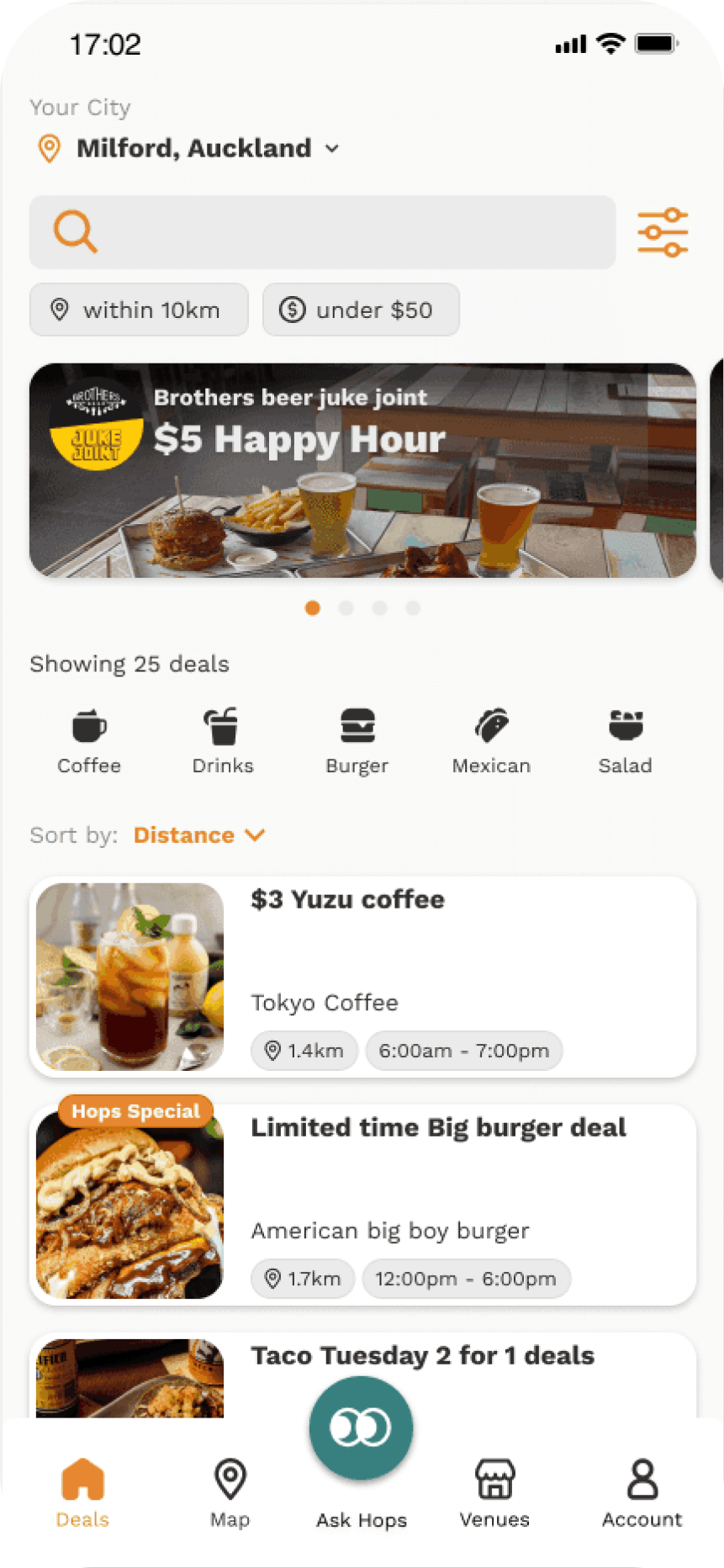
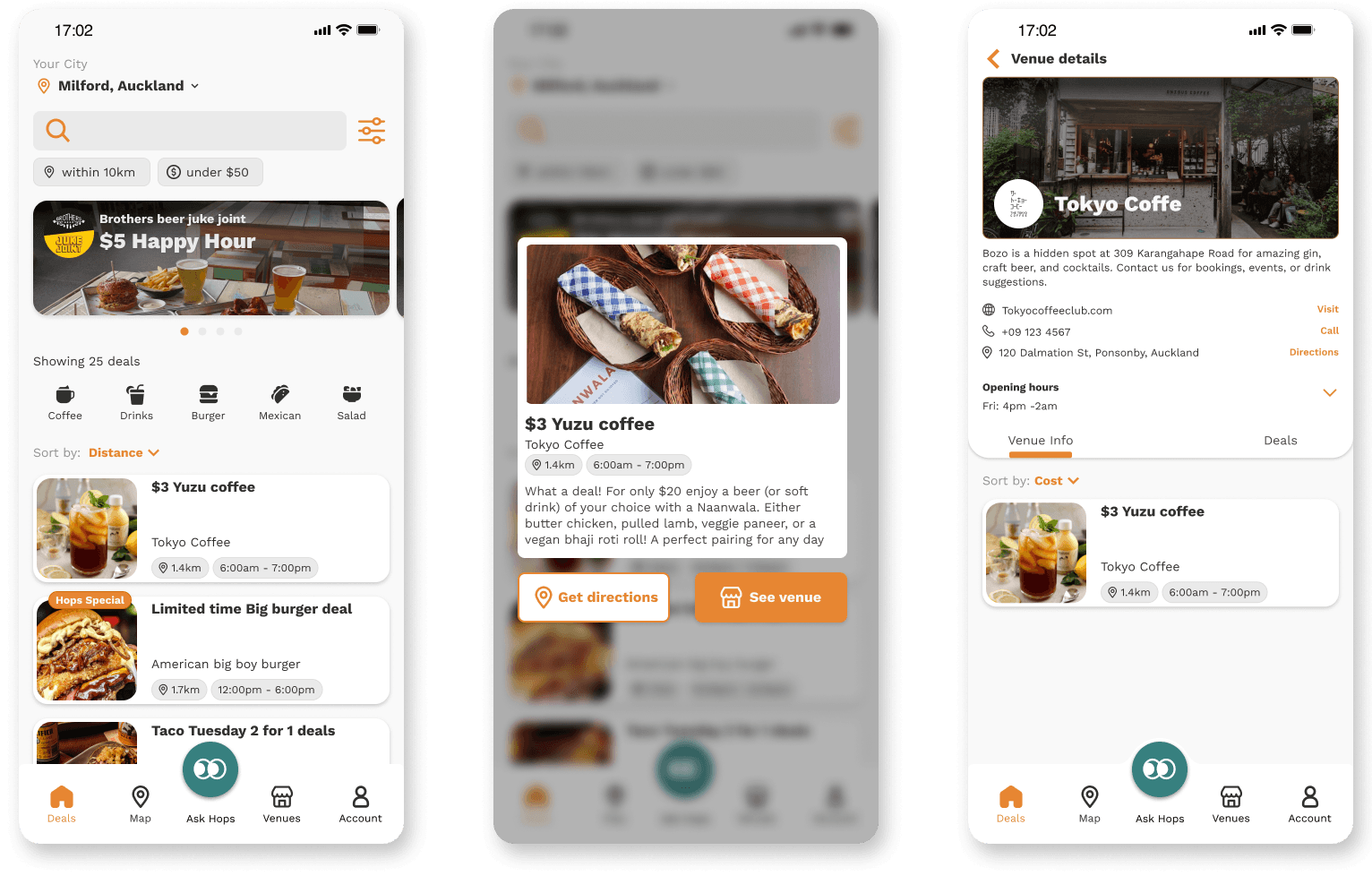
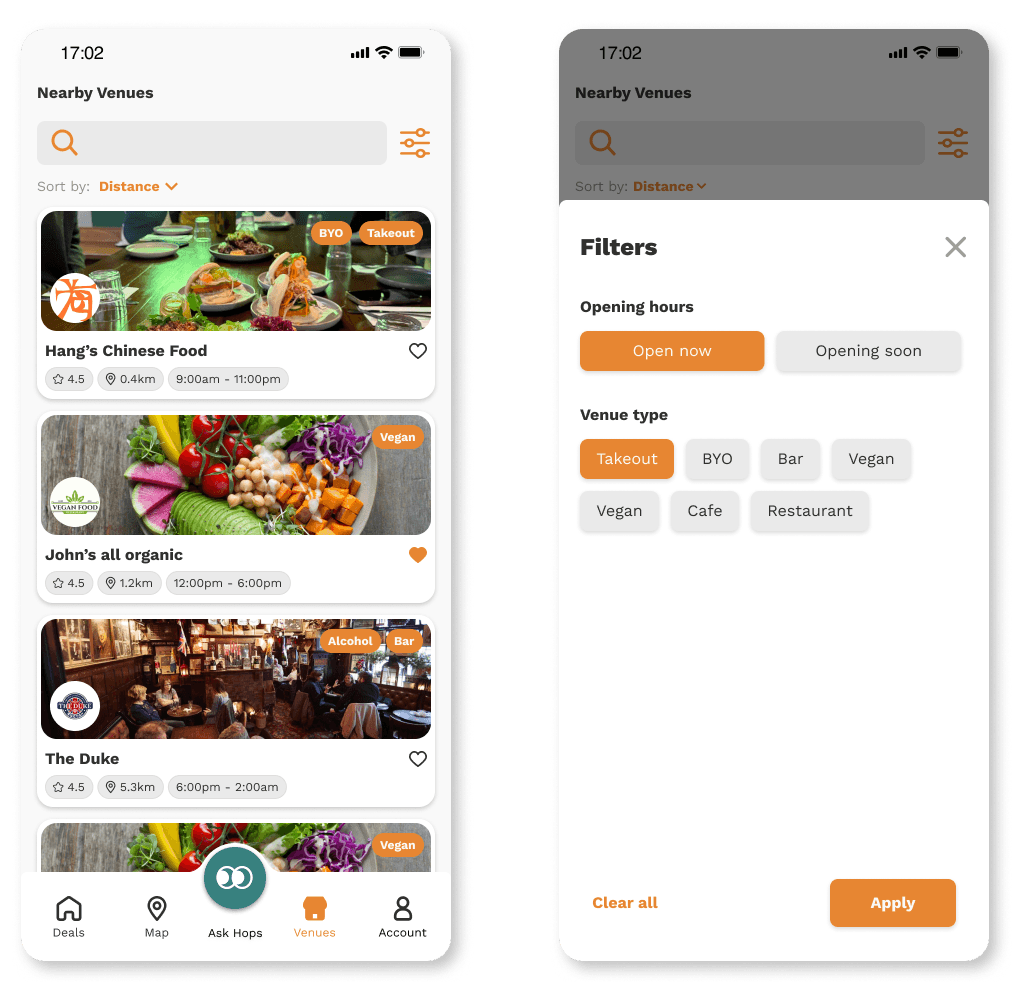
The home experience was designed around the first decision users make: what is worth leaving the house for right now. Filters, recommendations, deal cards, and venue details were brought together so users could move from browsing to choosing without jumping between tools.

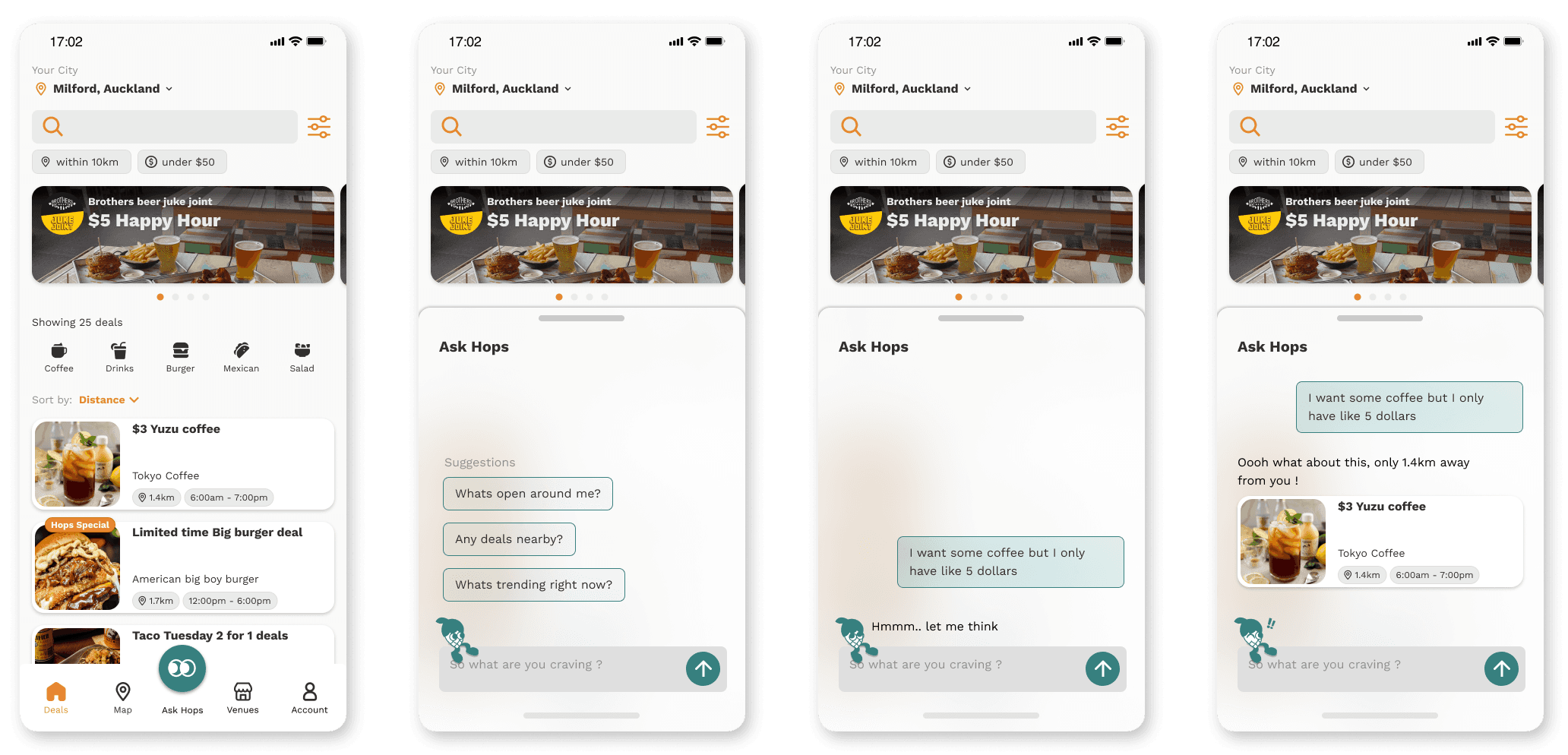
Your foodie friend Hops
The product voice leaned into the idea of a foodie friend who already knows the best deals. That gave the assistant-style experience a clearer job: reduce search effort and make recommendations feel curated rather than generic.

Map page
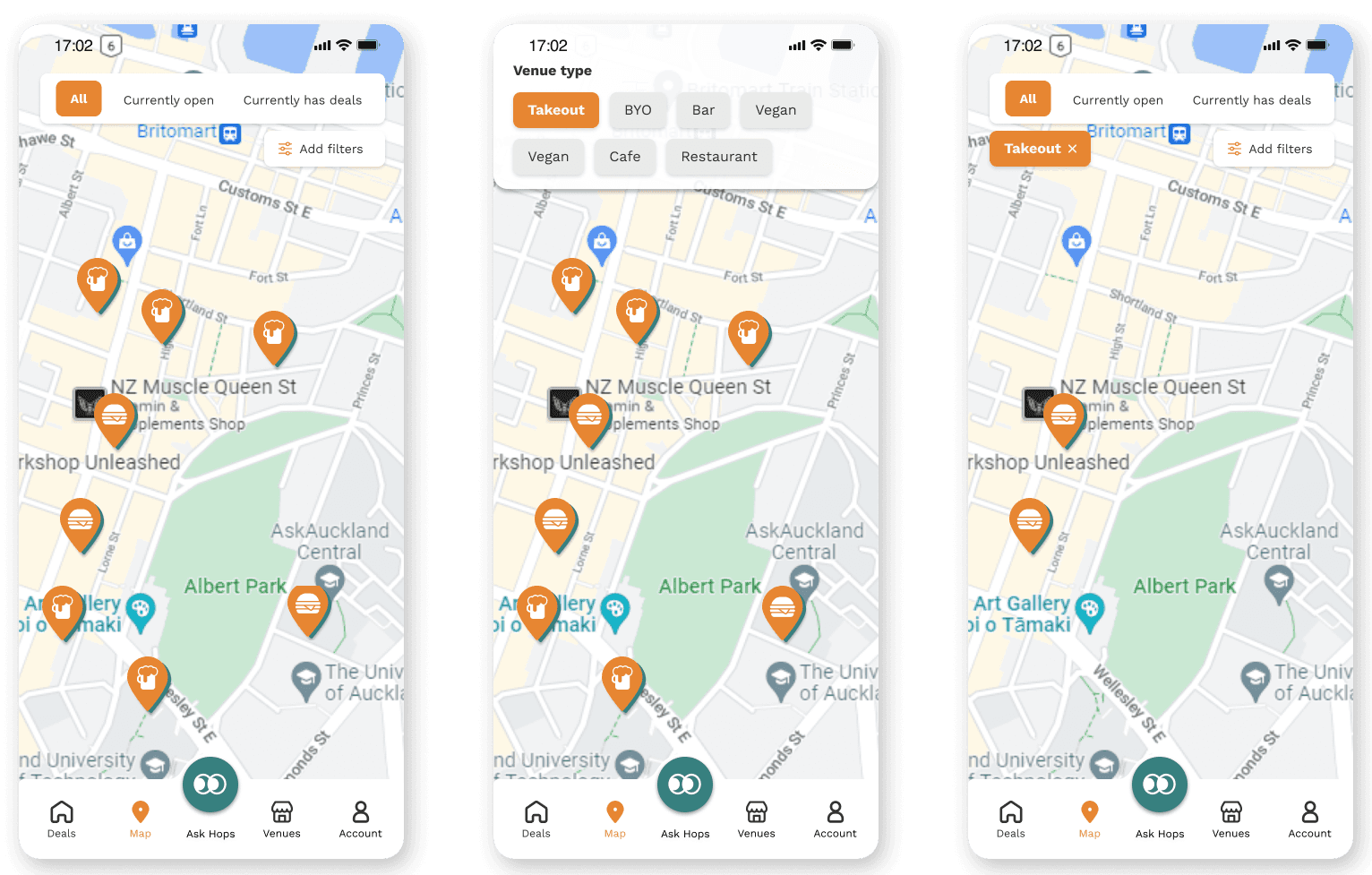
Because Auckland is spread across neighbourhood hubs, location mattered as much as the deal itself. The map view made nearby options more visible and gave users a faster way to compare what was realistically within reach.

Saving your favourites
Favourites turned one-off discovery into an ongoing habit. Users could keep track of places they wanted to try, making Hops useful before, during, and after the moment of choosing somewhere to eat.

Our design system
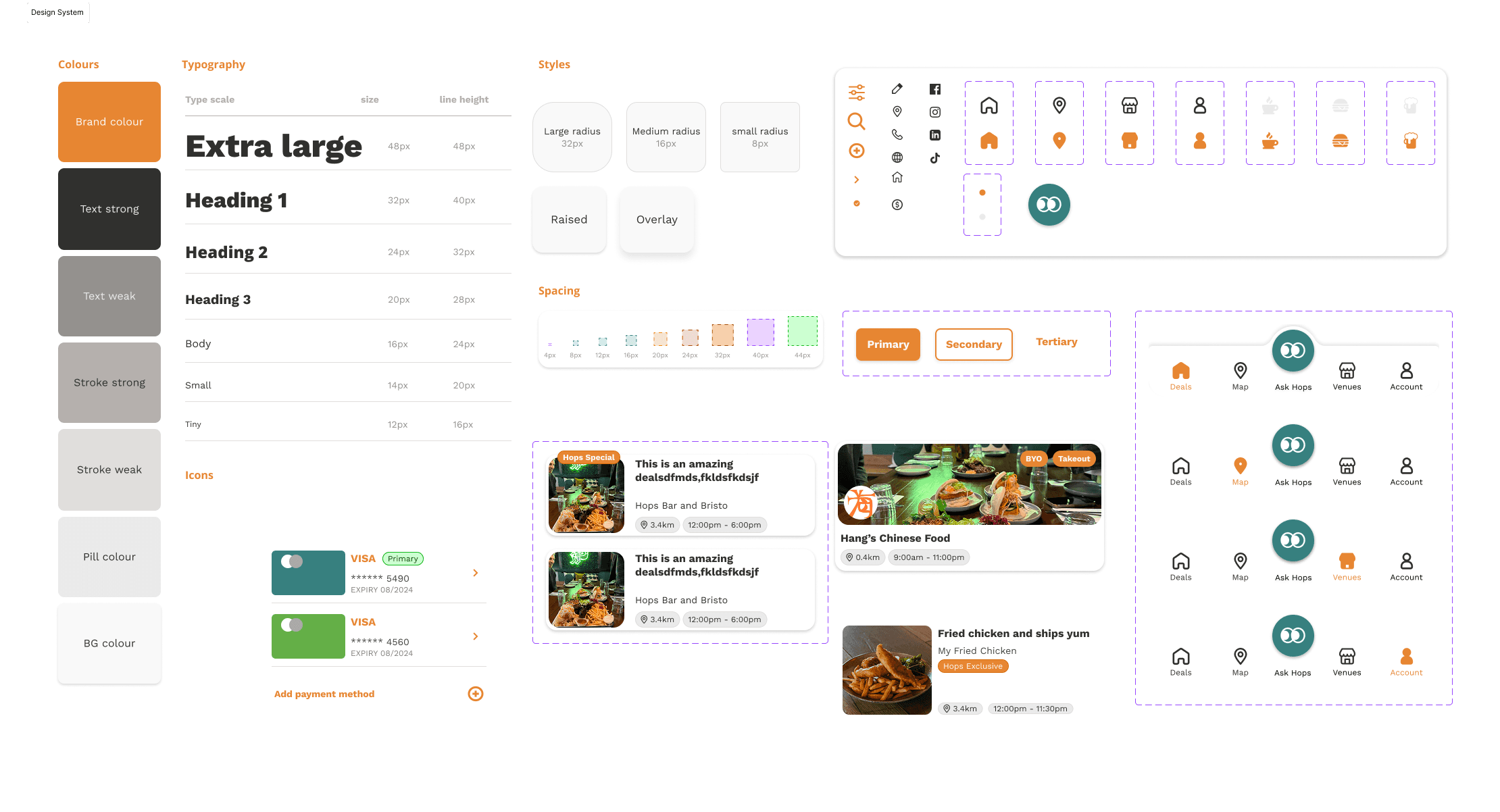
Alongside the flows themselves, I also crafted the Hops design system so the product felt coherent from brand through to interface.

Testing
Meeting our users on the street
After launching the MVP, we used Auckland University's O-Week for guerrilla testing with students. The goal was to see whether people understood the deal-finding value quickly, where they expected discovery to start, and which parts of the product felt worth returning to.